
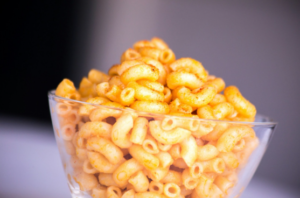
In the modern food industry, the ability to maintain product quality over long periods is a significant technological achievement. While fresh dairy products are notoriously perishable, requiring constant refrigeration and careful handling, dehydrated alternatives offer a much more durable solution.
Understanding how mac and cheese powder extends shelf life involves looking at the intersection of food chemistry, moisture control, and specialized packaging.
These factors allow for a product that remains safe, flavorful, and functional for months or even years without the need for traditional cold storage.
The Critical Role of Moisture Removal
The most fundamental reason for the long-lasting nature of this product is the process of dehydration. Bacteria, yeast, and molds require water to grow and reproduce. During the manufacturing process, fresh cheese and dairy components are converted into a fine dust through methods like spray drying.
By removing the vast majority of water content, the mac and cheese powder creates an environment where microbial growth is virtually impossible. This reduction in water activity is the primary barrier that prevents spoilage and ensures the product remains shelf-stable at room temperature.
Oxidation Control and Lipid Stability
Beyond microbial growth, the secondary threat to food quality is oxidation, which can cause fats to become rancid. High-quality cheese products contain milk fats that are sensitive to oxygen. To combat this, manufacturers often use stabilizers and natural antioxidants that protect the lipid molecules.
Because the mac and cheese powder is a dry, concentrated substance, it is easier to treat and protect than a liquid sauce. This chemical stability ensures that the sharp, savory notes of the cheese do not develop off flavors during extended periods in storage.
Barrier Packaging and Environmental Shielding
Even the most stable powder can be compromised if exposed to the elements. Therefore, the role of packaging is inseparable from the shelf life of the product itself. Most professional-grade powders are sealed in multi-layer foil or plastic pouches that act as a total barrier against light, oxygen, and moisture.
By keeping the mac and cheese powder in a controlled, dark, and dry environment, the integrity of the dairy solids is preserved. This protection is essential for maintaining the vitamin content and the vibrant color of the cheese over time.
Enzyme Inactivation Through Thermal Processing
Fresh cheese contains active enzymes that continue to break down proteins and fats, which is why the flavor of cheese changes as it ages. During the production of a cheese base, the ingredients undergo thermal processing that inactivates these enzymes.
This locks in the flavor profile at its peak. When you use a mac and cheese powder, you are working with a product that has been biologically paused, ensuring that the taste you experience today will be identical to the taste of a batch opened six months from now.
Structural Integrity of Dehydrated Solids
Unlike fresh sauces that can separate, curdle, or develop a skin, dehydrated solids maintain their structural integrity indefinitely. The proteins and emulsifiers in the mix are held in a static state.
This means that as long as the powder remains dry, there is no risk of the ingredients reacting with one another in a negative way.
This structural stability is a key reason why many large-scale catering and emergency food supply operations rely on these powders to provide consistent nutrition and comfort.