
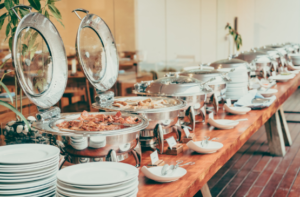
Catering businesses and restaurants need the right tools to prepare, cook, and serve food properly. The right catering equipment helps staff complete their cooking tasks while maintaining food safety standards and delivering exceptional customer service.
A kitchen cannot function properly during busy times without its necessary operating equipment. The restaurant and catering industry needs to acquire equipment that enables them to perform their tasks without disruptions to their workflow.
Below are some important types of catering equipment that every restaurant or catering business should have:
1. Cooking Equipment
The kitchen relies on cooking equipment as its fundamental element. Restaurants and caterers need strong, reliable machines to cook for large numbers of people. Using high-quality catering equipment for cooking ensures that food is prepared quickly and safely.
Restaurants use stoves, ovens, grills and fryers as their basic cooking equipment. These tools help chefs prepare a wide range of dishes, including grilled meat, baked goods, and fried snacks. High-quality cooking equipment allows chefs to cook food evenly and quickly, which is very important during busy hours.
2. Food Preparation Equipment
Food preparation needs to occur before cooking begins. Food preparation equipment helps workers easily cut, mix, and organize ingredients. Kitchen operations require cutting boards, knives, mixers, blenders, and food processors as essential tools for preparation.
These tools help save time and effort when preparing vegetables, meat, sauces, and dough. The kitchen cooking process improves its efficiency when it has the correct preparation equipment.
3. Refrigeration Equipment
Restaurants and catering businesses need to maintain food freshness through their operations. Refrigeration equipment keeps food at the correct temperatures, preventing spoilage.
Commercial kitchens rely on refrigerators and freezers for their essential operations. The equipment provides safe storage for meat and vegetables, dairy products and frozen foods. Businesses use effective refrigeration systems to maintain food safety standards and reduce food waste.
4. Food Storage Equipment
Restaurants and catering companies require dedicated storage solutions which enable them to maintain their ingredient inventory in an orderly manner. Storage containers and shelves, together with food bins, serve as storage solutions for dry ingredients, such as rice, flour, sugar, and spices.
The kitchen needs these storage tools because they maintain cleanliness and organizational order. This equipment protects food from dust, insects, and contamination. Workers can easily locate stored food items because proper storage methods help maintain their freshness.
5. Serving Equipment
Serving equipment enables caterers to display food in an appealing way while maintaining cleanliness. Common serving equipment includes trays and serving spoons, chafing dishes, and food warmers.
Catering events benefit from chafing dishes and warmers, which maintain food temperature until serving time. Restaurants use effective serving equipment to help their staff deliver food to customers in an organized manner.
6. Cleaning Equipment
Food businesses require a clean kitchen environment to operate successfully. Kitchen cleaning equipment establishes sanitary conditions which protect food safety throughout the establishment.
Kitchen cleaning process uses dishwashers, sinks, and cleaning cloths, along with sanitizing solutions, to clean both tools and work surfaces. These kitchen cleaning equipments enables users to remove all grease, food particles, and bacteria, ensuring safety for all employees and visitors who enter the space.